Style your closet, your way



· 4 min read
ai-fashion styling-tech thought-leadership dripmatiq
AI Styling Is Table Stakes — Here’s What Actually Matters Now
There’s a thread making the rounds on Hacker News this week: “AI fashion styling — who’s actually doing it well?” The comments are a mix of skepticism, genuine curiosity, and a few people who’ve clearly tried every app on the market.
Here’s the thing they all agree on: everyone claims to do AI styling now. It’s on every landing page, in every pitch deck, and baked into the marketing of apps that are really just glorified mood boards with a recommendation engine bolted on.
AI styling has become table stakes. The interesting question isn’t whether an app uses AI — it’s whether that AI actually knows anything about you.
The Gap Between Promise and Reality
Most “AI styling” works like this: you answer a quiz about your preferences, maybe upload a photo or two, and the app serves you product recommendations from its affiliate partners. It’s personalized in the same way that Netflix recommending you another true crime documentary is personalized — pattern matching at a population level, not individual understanding.
The problem? Your closet isn’t a quiz answer. It’s a living, evolving collection of pieces with histories, contexts, and constraints that no preference questionnaire can capture.
You bought that olive blazer for a specific job interview. Your linen pants fit differently after last summer. That silk scarf was a gift you’ve never figured out how to style. These aren’t data points you’d think to mention in an onboarding flow — but they’re exactly the context that makes styling advice actually useful.
What “Knowing Your Closet” Actually Means
Real closet intelligence requires three things that most apps skip:
1. Completeness
If the AI only knows about 30% of what you own, its suggestions will always feel slightly off. It’ll recommend a white tee you already have three of, or suggest a pairing that doesn’t work because it doesn’t know about the stain on your favorite jeans.
The unsexy truth: useful AI styling starts with the tedious work of actually cataloging what you own. Not just the hero pieces — everything. The basics, the forgotten items in the back of your closet, the things you keep meaning to donate.
2. Context Awareness
A blazer isn’t just a blazer. It’s a blazer you wear to client meetings, that runs slightly warm, that you always pair with those specific trousers because the lengths work together. Context is what transforms a database of garments into actual wardrobe knowledge.
This means understanding seasonality, occasion, comfort preferences, body changes, and the subtle rules you’ve developed over years of getting dressed. The kind of knowledge a good friend who raids your closet would have.
3. Honest Feedback Loops
The hardest part of styling isn’t generating suggestions — it’s learning from what actually gets worn. Most apps track what you click on or save. Very few track what you actually put on your body and walked out the door in.
Without that feedback loop, AI styling stays theoretical. It knows what you aspire to wear, not what you actually wear. And the gap between those two things is where most styling advice falls apart.
Why This Matters Beyond Vanity
This isn’t just about looking good (though that matters too). Closet intelligence solves real problems:
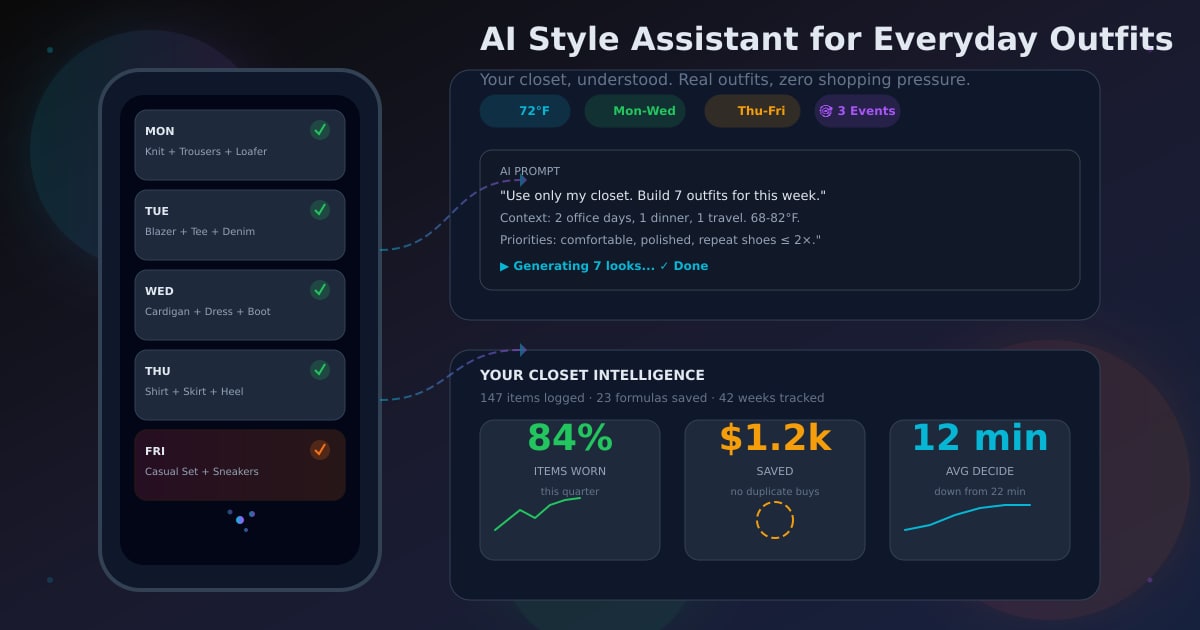
Decision fatigue. The average person spends 15-20 minutes deciding what to wear each morning. That’s over 100 hours a year spent staring at options you already own. An AI that genuinely understands your wardrobe can compress that to seconds — not by removing choice, but by surfacing relevant options you’d forgotten about.
Waste reduction. When you can see your entire wardrobe clearly and get suggestions that use what you already have, you buy less. Not because you’re being lectured about sustainability, but because you realize you already own something that works.
Confidence. There’s a specific kind of confidence that comes from knowing your outfit works — not hoping, knowing. That confidence compounds. You show up differently when you’re not spending mental energy second-guessing your clothes.
The Next Wave Isn’t More AI — It’s Better Data
The apps that will actually win this space aren’t the ones with the most sophisticated recommendation algorithms. They’re the ones that solve the data problem first.
Getting a complete, contextual picture of someone’s wardrobe is hard. It requires patience, good UX, and a genuine commitment to being useful with what someone already owns — not just steering them toward new purchases.
It means building an app that’s valuable on day one with five items logged, and becomes indispensable at fifty. It means treating the closet catalog not as an onboarding hurdle but as the core product experience.
Where We’re Headed
The conversation on HN will keep cycling. Every few months, someone will ask “is AI fashion actually useful yet?” and the answers will gradually shift from “no, it’s all gimmicks” to “actually, this one thing changed how I get dressed.”
That shift won’t come from better models or fancier algorithms. It’ll come from apps that respect the complexity of a real person’s relationship with their clothes, and do the hard work of truly understanding what’s in your closet before presuming to tell you what to wear.
The table stakes era of AI styling is here. The question is who’s ready to play the real game.
Dripmatiq is building closet intelligence that starts with what you already own. No quizzes, no affiliate links — just your actual wardrobe, understood deeply enough to be genuinely useful.
Your closet, decoded.
See what you already own in a whole new way.