Style your closet, your way



· 5 min read
style opinions wardrobe philosophy personal style fashion debate outfit confidence
The thread was simple: “What fashion hill will you die on?”
Within hours it had 1,800 upvotes and over a thousand comments on r/femalefashionadvice, and the answers were gloriously specific. “Matching metals is non-negotiable.” “Visible socks with loafers are a war crime.” “If your clothes don’t have pockets, they’re not finished garments.” “Tuck in your shirt or don’t — the half-tuck is a lie.”
Strong opinions, stated with zero apology.
Here’s the thing: those people dress well. The ones with the sharpest takes almost always have the most cohesive wardrobes. That’s not a coincidence.
Why Strong Opinions Build Strong Style
Most style advice is soft. “Wear what makes you feel good.” “There are no rules.” “Just be confident.” It sounds empowering, but it’s functionally useless. When you’re standing in front of your closet at 7:45 AM with nothing to wear, “be confident” doesn’t pick an outfit.
Rules do.
Not external rules — not “women over 40 shouldn’t wear mini skirts” or “men must match their belt to their shoes.” Those are someone else’s opinions dressed up as universal law. They’re noise.
The rules that work are the ones you’ve built yourself, through trial, error, and the slow accumulation of “this works for me” and “this never works for me.” Your fashion hills — the opinions you’d defend in a comment section — are your personal style operating system.
They’re filters. And filters are what make getting dressed fast.
The Three Fashion Hills That Actually Matter
Reading through that thread (and hundreds of similar conversations), the most useful fashion hills tend to cluster into three categories. Not coincidentally, these are the three decisions that trip people up most often when getting dressed.
Hill 1: The Fit Line
“Nothing looks good if it doesn’t fit” appeared in some form in almost every reply. But the specific version matters more than the general principle.
Some people’s hill is “I will always tailor my blazers.” Others: “Oversized tops, fitted bottoms — always.” Or: “If I can’t move freely in it, I won’t wear it.”
These aren’t fashion rules. They’re personal fit signatures. They tell you instantly whether a piece belongs in your wardrobe or not, which means fewer bad purchases and fewer “why did I buy this?” moments at 7:45 AM.
Your fit line is the single most useful style shortcut you can develop. It eliminates options — and eliminating options is how you get dressed faster.
Hill 2: The Color Boundary
“I don’t wear orange.” “All-black is a personality, not a cop-out.” “If it doesn’t go with navy, it doesn’t go in my closet.”
Color hills are powerful because color is the first thing your eye registers. Before silhouette, before fabric, before detail — you see color. Having a clear color boundary means your wardrobe self-coordinates. Every piece works with every other piece because you’ve already filtered at the color level.
This doesn’t mean wearing one color. It means knowing which colors are yours and which aren’t, and not wasting money or closet space on the ones that aren’t.
Hill 3: The Effort Threshold
This is the hill people are least likely to state but most likely to live by. It’s the answer to: “How much effort am I willing to put into getting dressed on a regular Tuesday?”
Some people’s threshold is high — they enjoy the process, they like layering, they’ll steam a blouse at 6 AM. Others want three pieces maximum and out the door. Neither is wrong. But pretending you’re a high-effort dresser when you’re a low-effort one (or vice versa) is why half your closet goes unworn.
Your effort threshold determines which categories of clothing actually work for your life. A silk wrap dress is beautiful. If your effort threshold is “grab and go,” it’ll hang in your closet untouched. Knowing this before you buy is the difference between a wardrobe that works and a closet full of aspirational purchases.
How to Find Your Hills
If you don’t know your fashion hills yet, try this:
The Complaint Test. Think about the last three times you saw someone’s outfit and had an involuntary reaction — positive or negative. “That color is wrong for their skin tone.” “Those shoes don’t match the energy of that outfit.” “Why would you wear that untucked?” Those reactions are your hills. You already have them. You just haven’t named them yet.
The Closet Autopsy. Pull out the five pieces you wear most and the five you wear least. What do the most-worn pieces have in common? That’s your style operating system in action. What do the least-worn pieces violate? Those violations point directly to your hills.
The Shopping Regret Audit. Every bad purchase broke one of your unspoken rules. The shirt that’s “fine but you never reach for it” — what’s wrong with it? The pants that looked great online but feel wrong in person — what specifically feels wrong? Each regret is a hill you haven’t articulated yet.
The Confidence Loop
Here’s why this actually matters beyond getting dressed faster: strong style opinions create a confidence loop.
When you know your hills — when you can say “I don’t do that” and mean it — you stop second-guessing. You stop buying things that break your rules. Your wardrobe gets smaller and more coherent. Getting dressed gets easier. And when getting dressed is easy, you walk out the door feeling like yourself.
That’s not confidence from clothes. It’s confidence from clarity.
The people in that Reddit thread with the strongest opinions? They’re not arrogant. They’ve just done the work of figuring out what works for them. They’ve named their filters. And those filters do the heavy lifting every morning.
So: what fashion hill will you die on? Name it. Defend it. Let it do its job.
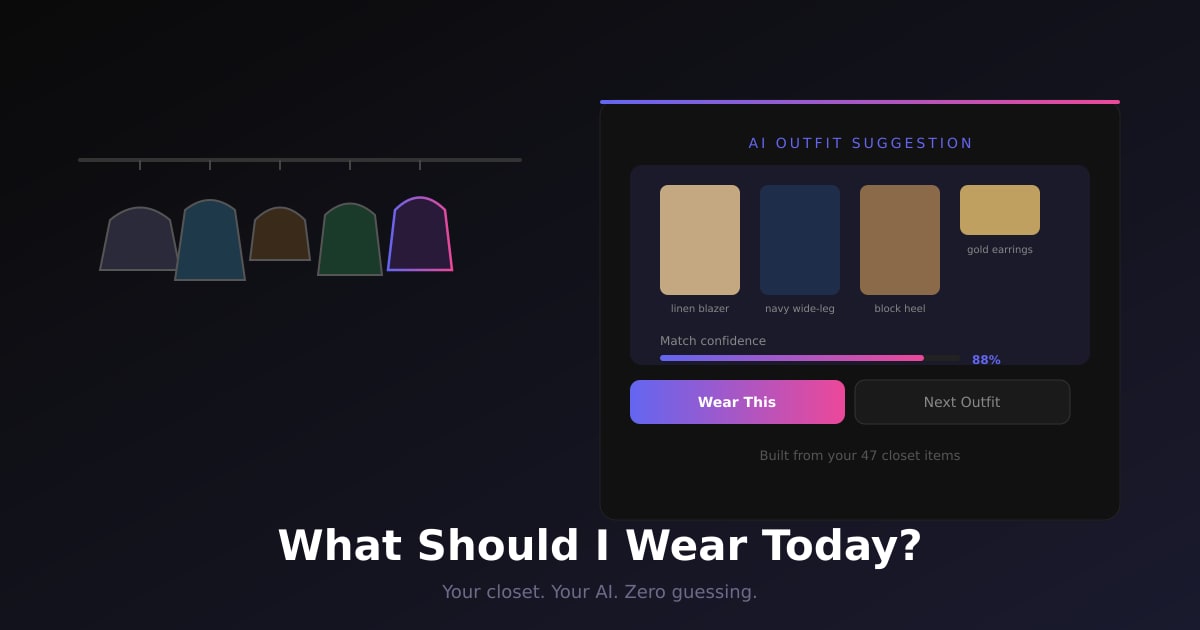
Dripmatiq is building tools that learn your style hills over time — your fit preferences, your color patterns, your effort level — so your closet starts filtering for you. Your opinions, automated.
Related reading
Your closet, decoded.
See what you already own in a whole new way.