Style your closet, your way



· 3 min read
wardrobe minimalism sustainable fashion capsule wardrobe outfit planning
I stood in front of my closet last Tuesday, staring at the sea of clothes I’d bought over the past year, and felt that familiar pang: I have nothing to wear. The irony was almost comical—I’d just returned from a shopping spree two days prior, bags full of new tops, dresses, and a pair of shoes I swore I’d wear constantly. Yet here I was, overwhelmed by choice and feeling utterly unprepared for the day ahead.
That moment sparked a question that’s been buzzing in my head ever since: What if the problem isn’t that I don’t have enough clothes, but that I’m not seeing the potential in what I already own?
For years, I treated my wardrobe like a consumable. Buy something new, wear it a few times, then let it languish in the back while I chased the next trend. The cycle felt endless, and honestly, a little exhausting. I wasn’t just spending money—I was spending mental energy on deciding what to buy, what to return, and what to donate. My closet was full, but my sense of style felt stagnant.
I decided to try something different: a buying freeze. Not forever, just for thirty days. During that month, I challenged myself to create outfits exclusively from pieces already hanging in my closet. No online browsing, no window shopping, no “just this one thing” exceptions. If I felt the urge to buy, I had to pause and ask why.
The first week was rough. I caught myself reaching for my phone to browse new arrivals out of habit. I felt bored with my go-to jeans-and-tee combo. But then something interesting happened. As I forced myself to remix, I started noticing pieces I’d forgotten I owned—a silk scarf buried in a drawer, a pair of statement earrings I’d worn once to a wedding, a bright blazer I’d bought on impulse and never paired with anything.
I began treating my closet like a puzzle. Each morning, I’d pick one item I loved—a patterned skirt, a cozy knit sweater—and build around it. I asked myself: Where would I wear this? What mood does it evoke? Then I rummaged for complementary pieces. Sometimes it worked perfectly; other times, I ended up in a clownish mismatch that made me laugh and try again.
I rediscovered the joy of accessories. A simple belt transformed an oversized shirt into a defined waist. Layering a turtleneck under a slip dress gave it winter-appropriate depth. Even rolling up sleeves or tucking a shirt differently created entirely new silhouettes.
By the end of the month, I hadn’t bought a single new clothing item. But I felt like I had a whole new wardrobe. More importantly, I felt liberated from the constant cycle of wanting and acquiring. My creativity—not my credit card—was driving my style.
Since then, I’ve kept the buying pause as a reset tool. Whenever I feel the urge to splurge, I challenge myself to style three new outfits from what I own first. Nine times out of ten, I realize I don’t need anything new—I just needed to see my closet with fresh eyes.
If you’re stuck in the buy-wear-regret loop, try this: Turn all your hangers backward. After wearing an item, return it facing forward. After a month, see what’s still backward—those are your true unworn pieces. Either donate them, or challenge yourself to style them in three different ways before letting go.
Your style doesn’t live in the store. It lives in your creativity, your memories, and the pieces that already belong to you. Start there, and you might just find that you had everything you needed all along.
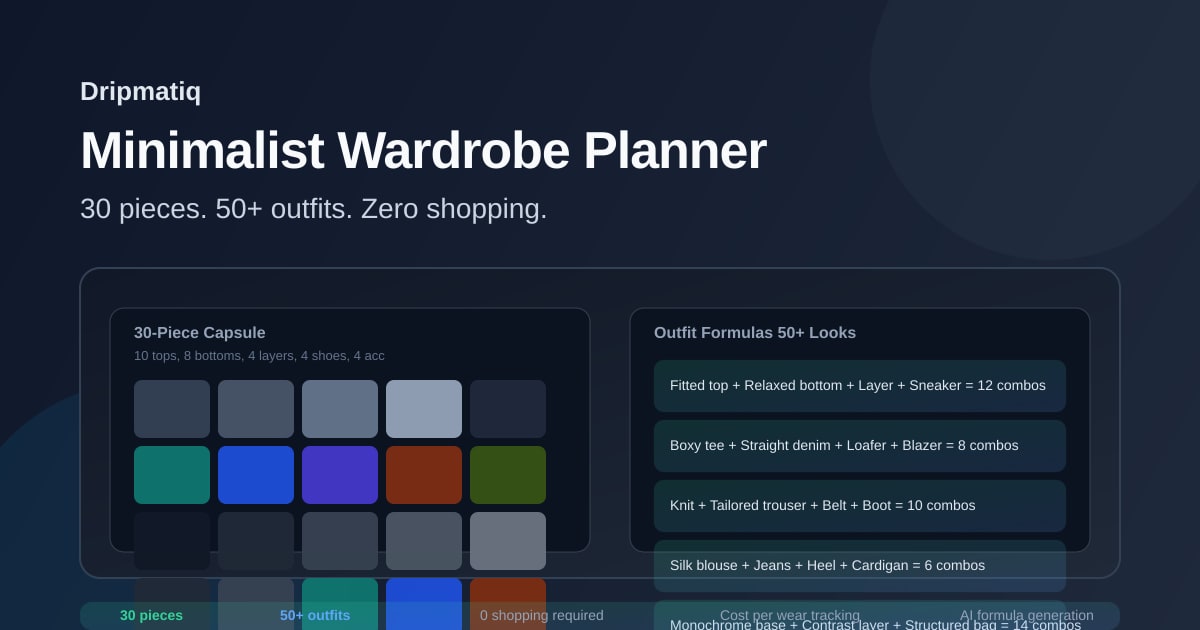
P.S. Ready to visualize your wardrobe’s potential? Try Dripmatiq’s outfit planner to mix and match what you own—no shopping required.
Start your wardrobe remix
Your closet, decoded.
See what you already own in a whole new way.