Style your closet, your way



· 3 min read
capsule wardrobe AI styling wardrobe tips outfit planning closet organization what to wear
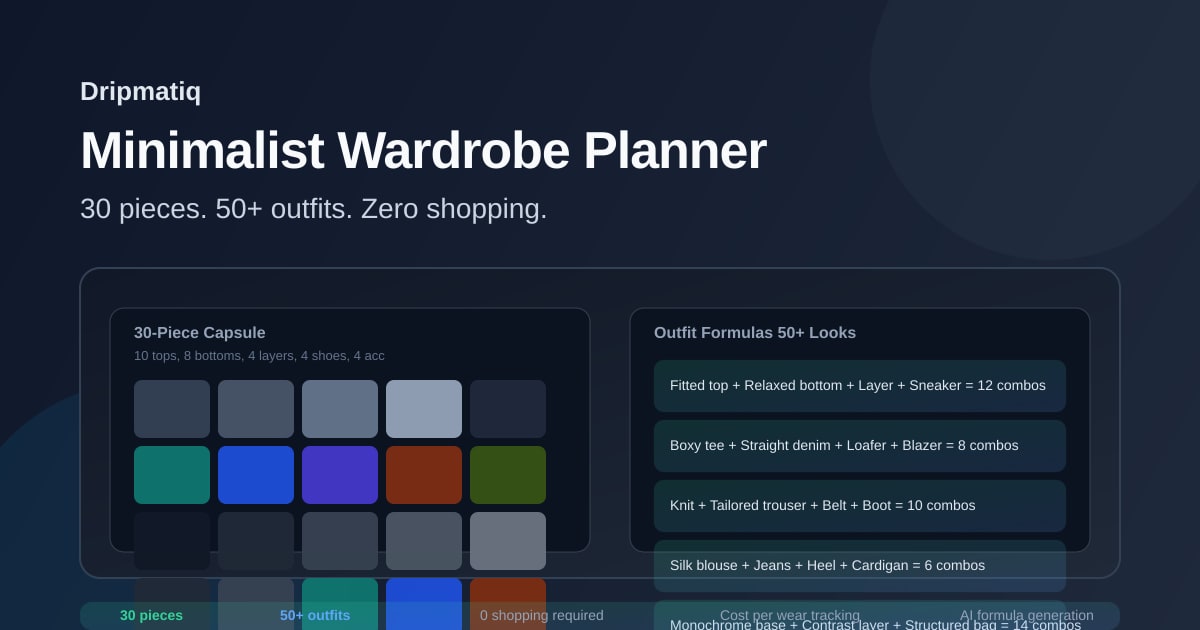
I did the capsule wardrobe thing twice.
First time: bought a book, followed the 37-piece rule, donated two garbage bags of clothes, felt very accomplished. Started reaching for the same six outfits within a week.
Second time: found a “minimalist wardrobe challenge” on Instagram, edited my closet down to 30 pieces that theoretically all went together, photographed them in a grid. Still stood in front of my closet on a Wednesday morning feeling like I had nothing to wear for a 2 PM client call.
Here’s what I finally understood: the capsule I built both times was for someone else’s life.
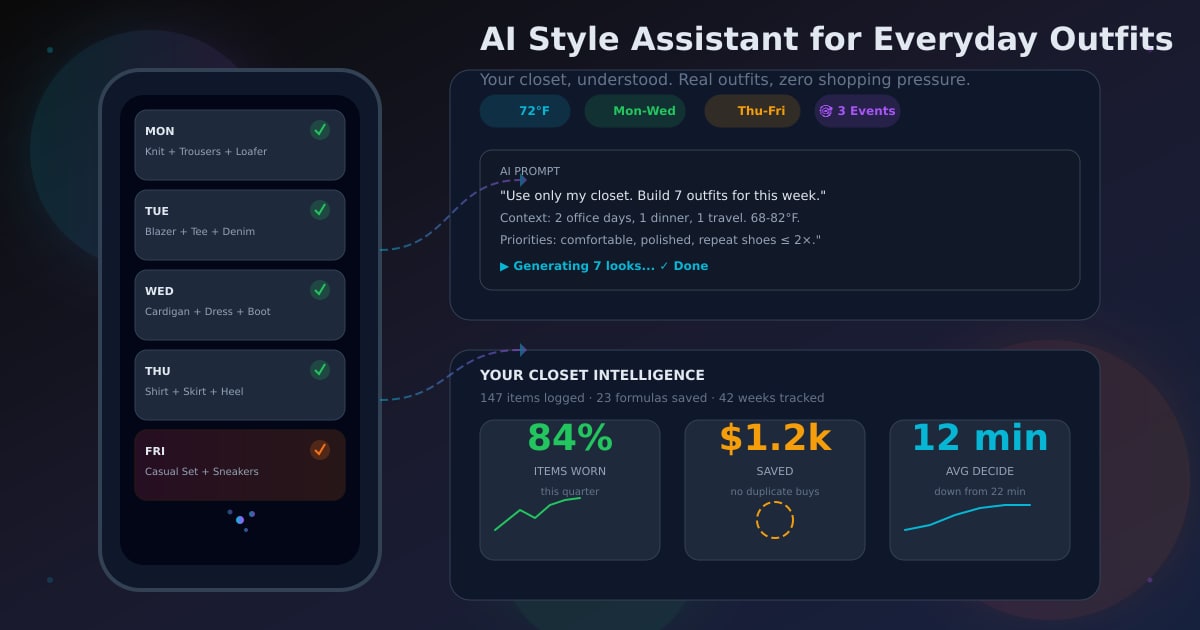
The magazine capsule is for a woman who has coffee meetings, gallery openings, and dinner parties. My actual week is: WFH Monday through Wednesday, gym early Thursday morning, client visit Thursday afternoon, casual everything on weekends, one recurring obligation that’s weirdly formal for a suburban town.
No 37-piece universal list covers all of that without duplicates and dead weight.
The Occasion Problem Nobody Talks About
Every capsule guide glosses over the same thing: your occasions are not generic.
My gym-to-coffee transition is a real context in my week. So is “video call from the waist up.” So is “garden party for a six-year-old’s birthday where I’ll be on the ground playing with kids.”
A capsule wardrobe that doesn’t account for your specific occasion mix isn’t really a capsule for you. It’s a costume for someone else.
The pieces I kept purging weren’t bad pieces. They were pieces that didn’t map to any occasion I actually had. And the pieces I kept reaching for? They were the ones that could stretch across two or three of my real contexts.
Once I understood that, the whole project changed.
What Finally Made My Closet Work
I stopped asking “does this spark joy” and started asking “which of my actual occasions does this cover?”
If a piece only works for one occasion I have twice a year, it’s not earning its closet space. If a piece works for three different contexts I’m in every week, it’s doing real work.
This is a lot of cognitive load to do manually. You’re essentially building a matrix: every piece you own, mapped against every occasion you have, scored by frequency.
AI handles this in seconds.
When I cataloged my actual wardrobe and told the AI what my real week looked like, it surfaced something I’d never noticed: I had five pieces that worked for WFH but nothing that worked for both my gym mornings and running errands right after. That was a real gap — not a vague feeling that I “needed more basics,” but a specific hole in a specific context.
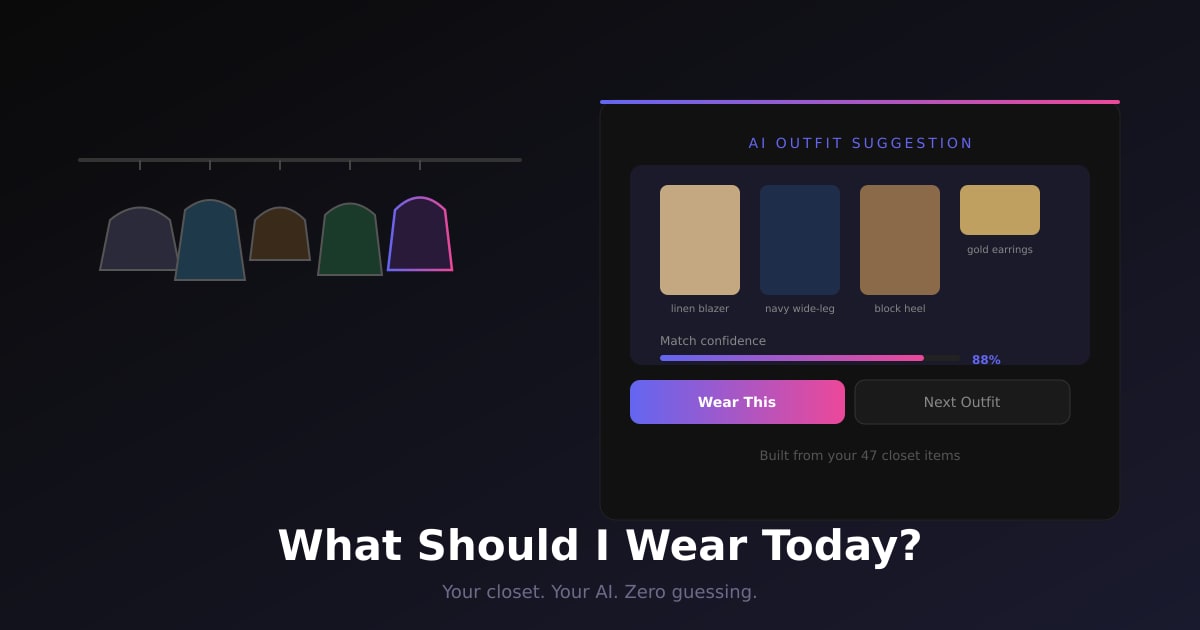
It also showed me combinations I’d been ignoring. That navy midi skirt I thought was too formal for everyday? Pairs with my oversized linen shirt and flat sandals for exactly the kind of casual-weekend-but-put-together look I’d been reaching for and not finding.
The outfit was always there. I just couldn’t see it.
The Capsule You Already Own
tbh the biggest shift was realizing I didn’t need to build a capsule from scratch.
I needed to find the capsule that was already hiding in my closet.
Most people already own a functional wardrobe. They just can’t see it because there’s too much noise, and no system that maps the pieces to the actual contexts they live in.
Once you have that map — occasion by occasion, piece by piece, combination by combination — your closet stops being a source of morning anxiety and starts being something that actually works for you.
That’s what a capsule wardrobe is supposed to be.
Not 37 pieces picked by someone else. Your pieces, mapped to your life, showing you what you already have.
Your closet, decoded.
See what you already own in a whole new way.