Style your closet, your way



· 4 min read
style AI-personal-stylist wardrobe glow-up outfit-ideas
I want to tell you about the week I had what felt like a full style transformation.
New me. New confidence. Walked into rooms differently. Got actual compliments from people who had never said anything about what I wore before.
I did not buy a single piece of clothing that week.
The Embarrassing Backstory
I have too many clothes. I know this. Most of us know this about ourselves and feel some quiet guilt about it.
But somehow, despite having a closet that requires structural organization, I got dressed every single day in basically the same seven outfits. The same black jeans. The same oversized crewneck. The same rotation I’d had on autopilot since roughly forever.
Everything else just… sat there. Tags still on some of it. Perfectly good stuff, just invisible to me.
I told myself I’d do a big closet audit one day and fix this. I said this for approximately two years.
What Actually Broke the Pattern
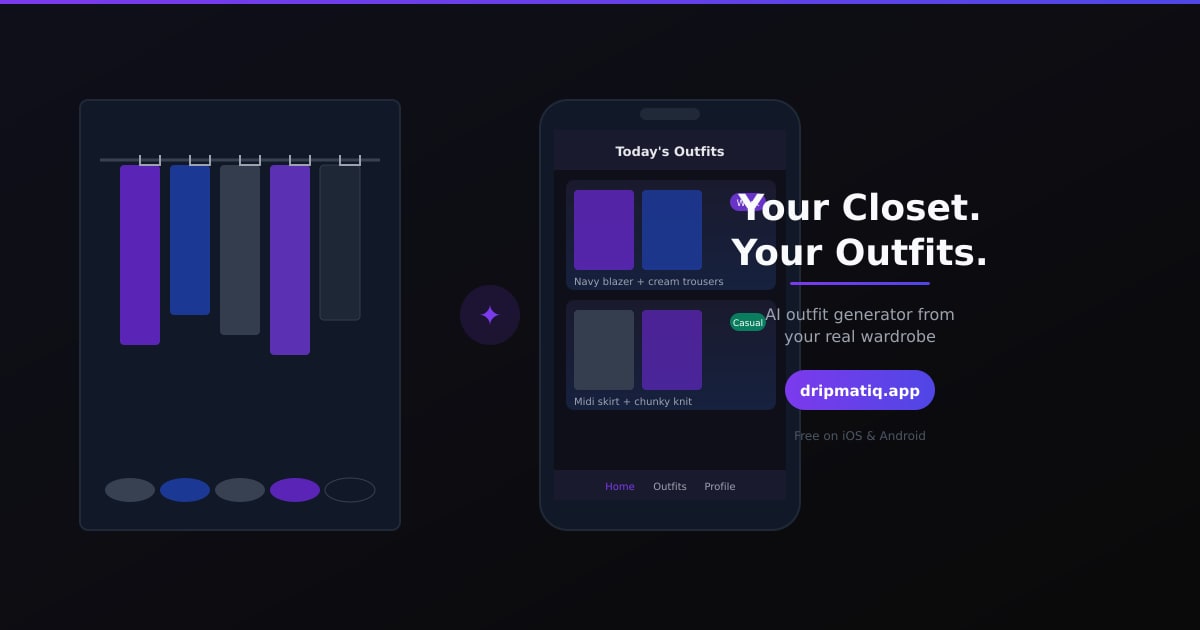
I started using an AI personal stylist app — specifically Dripmatiq — mostly out of curiosity. The premise was simple: photograph your actual wardrobe, let the AI generate outfit combinations from what you own.
I expected it to confirm what I already knew. Tell me my basics were fine. Show me some safe combinations I’d already figured out.
Instead, the first batch of suggestions included three outfits I had genuinely never considered.
One of them paired a blazer I bought at a sample sale two years ago — which I’d mentally filed under “doesn’t go with anything” — with some wide-leg pants I wore once, a white tank, and white sneakers.
I stared at the screen for a second. Then I went to my closet and put it on.
It was a really good outfit. Like, actually good. Where had this been for two years?
What the AI Saw That I Couldn’t
Here’s the thing about dressing yourself after you’ve been doing it the same way for a while: your brain stops seeing the pieces. It sees the patterns.
You don’t reach into your closet and think about what you own. You think about the short list of combinations you’ve already verified work. Everything outside that list is just background noise.
An AI doesn’t have that list. It sees all your pieces fresh, every time, and pattern-matches across color families, silhouettes, and what actually works together.
It saw that blazer as a layer. Not as a blazer. Not as “the blazer that’s too formal for anything in my life.” As a layer that happens to be structured, that pulls the wide-legs from casual to intentional, that gives the whole thing a shape.
I needed someone outside my own head to point that out.
The Week That Changed Things
I committed to wearing one AI-suggested outfit every day for a week.
Day one was the blazer thing. Day two was a wrap dress I’d written off as “a summer dress that doesn’t work for spring” — layered over a fitted turtleneck, which the AI proposed and I would absolutely never have tried. Day three involved a pair of earrings I’d bought at a vintage market that I genuinely thought didn’t go with anything in my wardrobe.
The AI disagreed. The AI was right.
By day five, I’d found six outfits I’d never worn. By day seven, I had figured out that I didn’t need more clothes. I needed to stop making decisions alone.
That’s when the compliments started. Not because I was wearing new things. Because I was putting together combinations that were actually interesting — that showed I’d thought about it — when for years I’d just been defaulting to what felt safe.
What This Actually Changed
The glow-up wasn’t really about the outfits.
It was about knowing my wardrobe. Like, actually knowing it — being able to say “I own a blazer that works with almost everything” rather than “I have a blazer I never wear.”
Once that shift happened, I stopped feeling like I needed to buy things. Not because I was a minimalism convert, but because the things I had started actually working. The desire for more things mostly comes from feeling like what you have isn’t enough. Fix the visibility problem, and a lot of that goes away.
The Thing I’d Tell Past Me
Stop blaming the wardrobe.
The wardrobe is probably fine. The problem is that your brain has stopped seeing it clearly, and you need something outside your own habits to show you what’s there.
You don’t need a shopping trip. You need a fresh set of eyes on what you already own.
Fortunately, those now cost nothing.
Dripmatiq is free to try — see what AI finds in your wardrobe →
Your closet, decoded.
See what you already own in a whole new way.