Style your closet, your way



· 3 min read
quiet luxury AI styling capsule wardrobe minimal fashion summer 2026
Quiet luxury isn’t new. It’s been simmering since The Row made $1,200 T-shirts feel aspirational. But in Summer 2026, it’s gone fully mainstream — every capsule wardrobe guide, every “what to wear” listicle, every Pinterest board is whispering the same thing: less, but better.
Here’s what nobody’s talking about: the AI styling tools flooding the market right now are doing the exact opposite.
The Noise Problem
Open most wardrobe apps in 2026 and you’ll get hit with a firehose. “Try this trend!” “Mix these patterns!” “Add this accessory!” They treat your closet like a buffet and your body like a mannequin.
That’s not styling. That’s overwhelm in a prettier package.
The quiet luxury ethos — restraint, intention, knowing when to stop — should apply to the tools we use to get dressed, not just the clothes we put on.
What “Subtract, Not Add” Actually Means
When a skilled stylist works with a client, they don’t start by adding pieces. They start by removing what doesn’t belong. They edit. They curate. They find the five pieces that make everything else redundant.
An AI styling tool should work the same way:
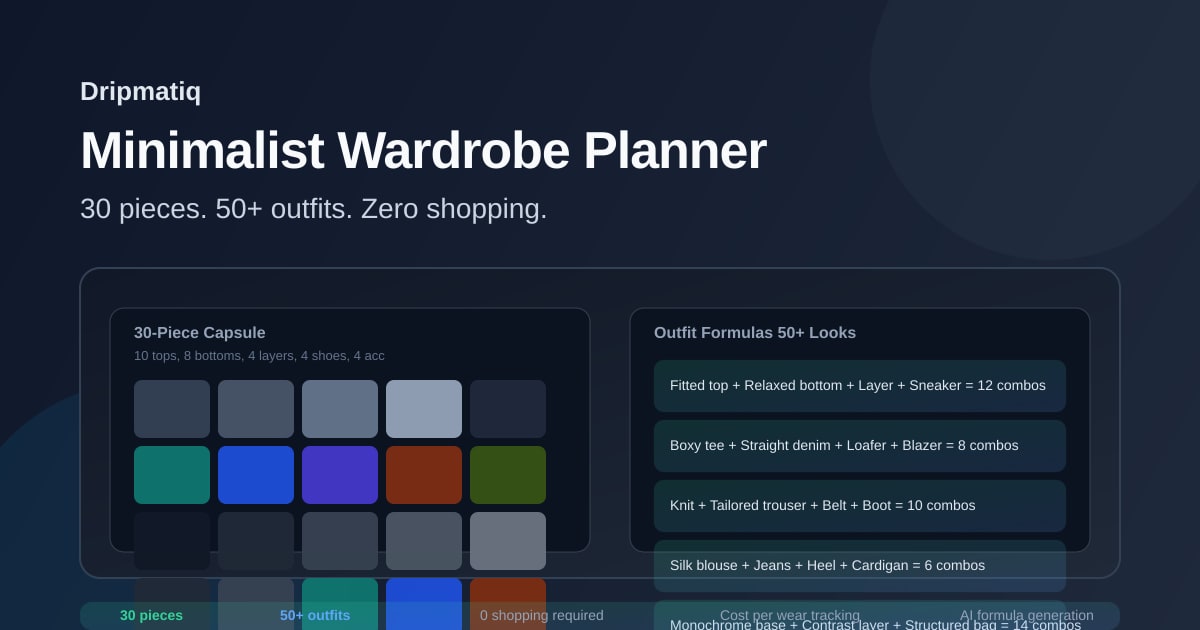
1. Start with what you own. Not what you could buy. Not what’s trending. What’s already hanging in your closet, right now, today.
2. Surface the combinations you’re overlooking. You probably have 40% more outfits in your wardrobe than you realize. The problem isn’t missing pieces — it’s missing connections between pieces.
3. Tell you what to remove. This is the hard one. A great AI stylist should be able to say: “These seven items are creating noise. They don’t combine with anything else you own. Consider letting them go.”
4. Suggest additions only when there’s a genuine gap. Not “this is trending” — but “adding one navy blazer would unlock 12 new outfit combinations from pieces you already have.”
Why Most Apps Get This Wrong
The business model is the problem. Most fashion apps make money when you buy things. Affiliate links. Brand partnerships. “Shop this look” buttons everywhere.
When your revenue depends on consumption, you’ll never build a tool that tells someone they already have enough.
That’s the quiet luxury paradox in tech: the aesthetic says “less” while the business model screams “more.”
The Taste-First Approach
What would it look like if an AI styling tool was built around taste instead of transactions?
It would learn your aesthetic, not just your sizes. Understanding that you gravitate toward clean lines, neutral palettes, and structured shoulders — and then working within that language instead of constantly pushing you outside it.
It would respect seasonal rotation, not seasonal shopping. Summer doesn’t mean a new wardrobe. It means pulling certain pieces forward and letting others rest.
It would measure success by outfit satisfaction, not items purchased. Did you feel put-together today? Did getting dressed take less time? Did you reach for pieces you’d forgotten about?
It would treat your closet as a complete system. Not a starting point for a shopping trip, but a curated collection that already works — it just needs better organization.
The Summer 2026 Test
Here’s a practical experiment. Take five minutes this week:
- Pull out your five most-worn summer pieces from last year
- Ask yourself: what’s the one item I always wished I could pair with these but never found?
- Now look at what you already own. Is the answer already there, just buried?
Nine times out of ten, the answer is yes. You don’t need an app to tell you to buy something new. You need a system that helps you see what you already have.
Where We’re Headed
The next generation of AI styling isn’t going to be louder. It’s going to be quieter. More confident. More like a trusted friend who says “that works, stop second-guessing” rather than an algorithm that says “have you considered adding a statement necklace?”
Quiet luxury isn’t about price tags. It’s about signal-to-noise ratio. And the best AI tools — in fashion or anywhere else — will be the ones that help you find signal in your own closet.
Less scrolling. Less buying. Less decision fatigue.
More wearing what you love. More confidence in what you already own. More mornings where getting dressed takes two minutes instead of twenty.
That’s the promise. And it’s a lot more interesting than another “shop this trend” notification.
Mira writes about fashion, technology, and the space where they intersect at Dripmatiq.
Your closet, decoded.
See what you already own in a whole new way.